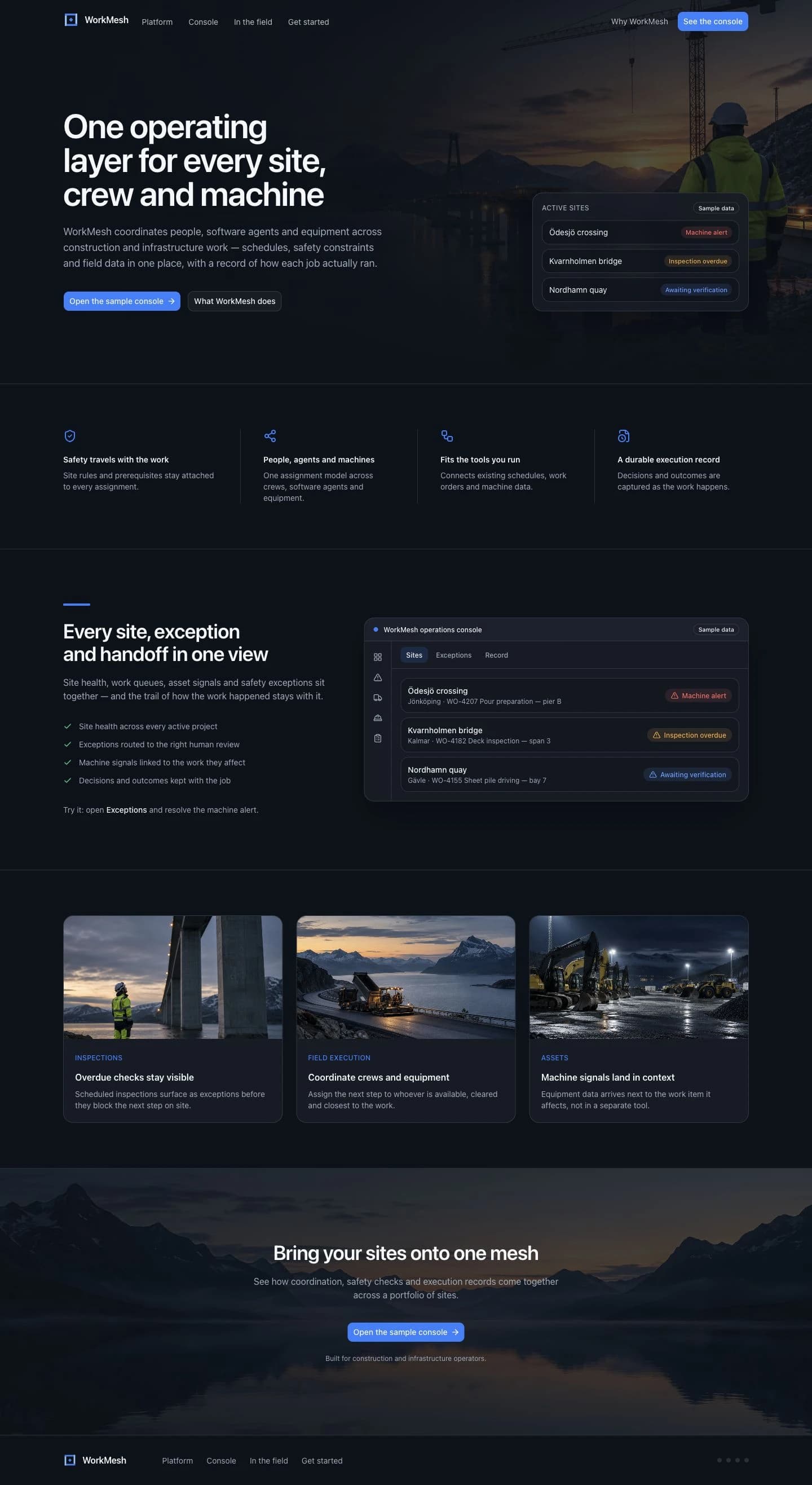





🏗️ One operating layer for every site, crew and machine.
WorkMesh coordinates people, software agents and equipment across construction and infrastructure work. We bring schedules, safety constraints and field data together so teams can see what is ready, what is blocked and what needs attention. Every assignment carries its prerequisites, with a record of the decisions and outcomes as the work happens.
Business Snapshot
💡 What problem are we solving?
Construction teams coordinate changing schedules, shared equipment and site rules across tools that rarely tell the whole story. A delayed inspection or unavailable machine can hold up several crews. Site managers need a shared view of readiness and dependencies without losing the context behind each decision.
🔧 What is our solution?
Connect existing schedules, work orders and machine data in one operating layer. Use a common assignment model for crews, software agents and equipment, keeping site rules and prerequisites attached to the work. Surface blockers, capture field updates and preserve an execution record as plans change.
✅ What are the benefits?
A clearer view of assignments could help teams spot conflicts earlier, reduce repeated status requests and make handovers easier. A shared record would help supervisors understand why work changed and what still needs verification. Pilot teams should measure these improvements against their current coordination process.
⚔️ What alternatives do customers have today?
Alternatives include scheduling tools, equipment-management systems, spreadsheets and conversations spread across messaging apps. WorkMesh connects the tools a team already runs, focusing on coordination across people, agents and machines. Customer interviews should establish where this shared view adds the most value.
Business model
Explore a subscription for contractors and infrastructure operators, with onboarding support for their existing schedules and field systems. Test pricing by active site or team with prospective customers. A first pilot should establish the coordination value, integration effort and support needs before setting commercial terms.
Market size
Our First Customers (SOM): construction teams coordinating several crews and shared equipment on an active site. Prioritise a pilot with a named site manager, accessible work-order data and a clear coordination problem.
Our Target Customers (SAM): contractors and infrastructure operators managing work across multiple sites. All Potential Customers (TAM): organisations coordinating people and equipment in field operations. Validate the opportunity through customer interviews and measured pilot outcomes before estimating revenue.
Sustainability
Better coordination may help teams reduce unnecessary equipment movements, idle time and repeated site visits. Measure these effects during a pilot instead of assuming a benefit. Keep safety decisions with the responsible people and use the shared execution record to make prerequisites, checks and outstanding issues visible.
What to test next
Interview site managers about daily planning and handovers. Map a representative job from assignment through inspection and completion, then connect a small set of schedules, work orders and equipment updates. Agree pilot measures for coordination time, blocked assignments and record completeness with the team before rollout.