How to start a business with AI: a worked example
Turn an idea into a testable offer, a first website, and a clear learning plan. A practical walkthrough with explicit founder decisions.
By Polycorp team · Published
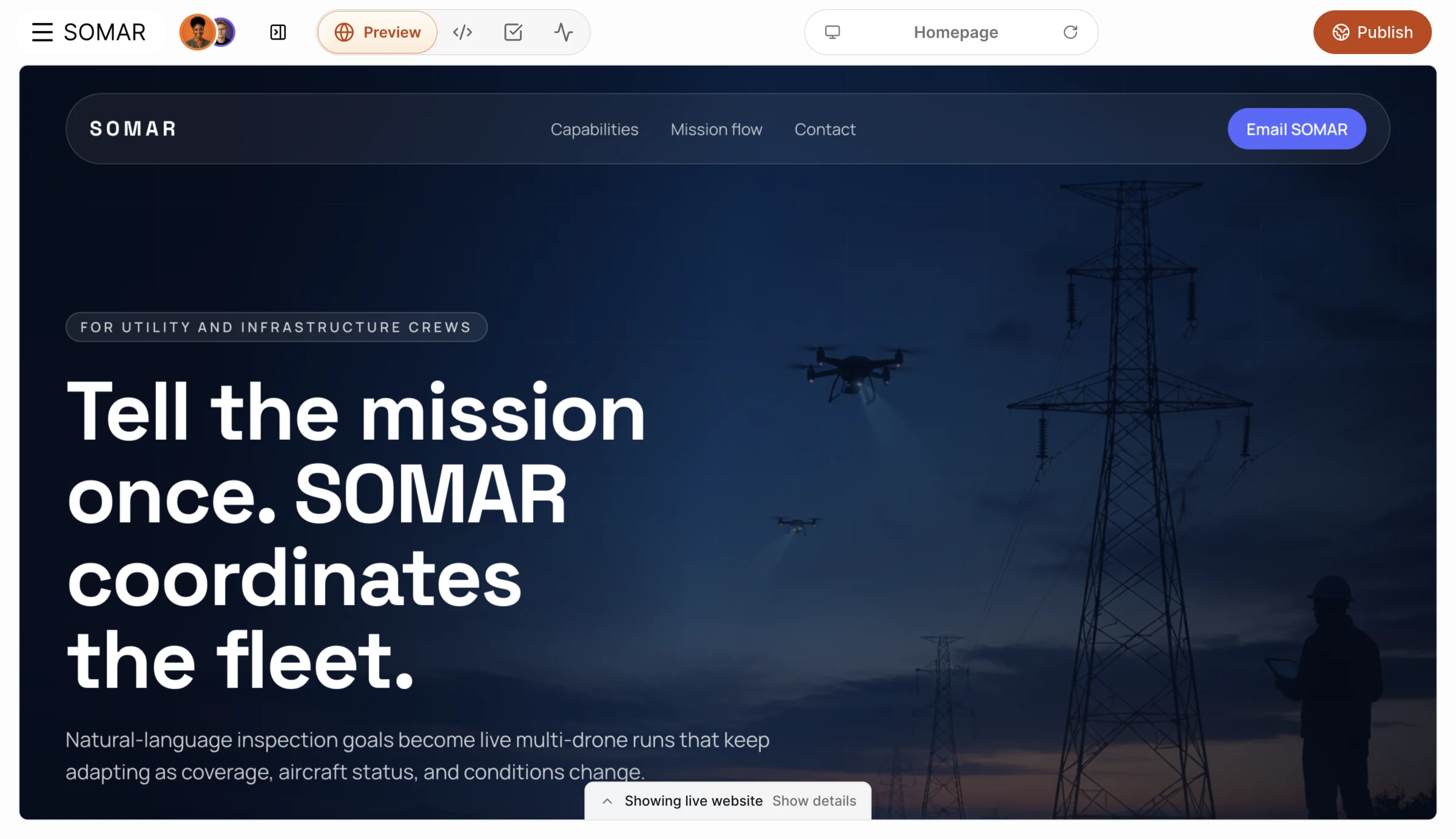
Starting a business with AI means using software to reduce the work of researching, writing, building, and organizing. You still need to choose a customer, understand a real problem, and decide whether the evidence justifies another step. A live website is useful when it helps you learn something specific.
This walkthrough uses an illustrative business: short product-photography workshops for independent shop owners. It is a planning example, not a customer success story. No demand, revenue, or customer results are claimed.
1. Make the customer and problem specific
“Help small businesses with marketing” leaves too many decisions open. Narrow the starting point to independent shop owners who photograph new stock themselves and struggle to produce consistent images. The first assumption is that this happens frequently enough for them to spend time or money improving it.
A useful initial brief is: “I want to test a practical product-photography workshop for independent shops. Owners should leave with a repeatable setup using equipment they already own. I have not interviewed customers or validated a price.”
Give your agent the evidence you actually have. Mark guesses as guesses. Ask it to separate customer observations, research sources, proposed assumptions, and unanswered questions. Review that separation before generating more material.
2. Build a research brief you can check
Ask for a short list of alternatives: doing the work in-house, hiring a photographer, taking an online course, or changing the equipment. For each alternative, request a source and the date checked. Open the sources before relying on the answer. An AI summary can help you organize information, but it cannot establish that your intended customer will buy.
Keep a small decision log in your company workspace:
- Customer: independent shop owners who photograph their own stock.
- Problem to test: inconsistent images make publishing new stock harder.
- Offer to test: a hands-on workshop using the owner's existing equipment.
- Unknowns: frequency, current spending, willingness to attend, and who decides.
- Next evidence: conversations about the last time this problem occurred.
3. Publish an honest first offer
The first page should explain who the workshop is for, what a participant would do, what they would take away, and how to express interest. If you have not chosen dates or confirmed delivery, say that you are exploring a pilot and collecting interest.
For this example, the page outline might be: “Product photos you can repeat in your own shop,” a short explanation of the pilot, a list of the practical exercises, and one contact action. Use your own example images or images you have permission to publish. Do not invent testimonials, customer logos, or workshop results.
In Polycorp, website creation stays connected to your company context. Review the generated copy, contact links, mobile layout, and published page yourself. The screenshot above shows the existing website workspace using a different example company; it does not represent a completed photography business.
4. Turn the launch into an experiment
Before sharing the page, write down the question it should answer. For example: “Will shop owners who have recently struggled with product photos agree to a conversation about a pilot?” Decide what response would cause you to continue, change the offer, or stop. Set that decision rule before looking at the results.
Reach relevant people through channels where you can contact them appropriately. Record how many people actually saw the offer, how they responded, and what happened next. A page view, an email address, and a paid pilot are different signals. Keep those outcomes separate.
5. Keep the next decision small
After the conversations, compare what people said with what you assumed. Perhaps equipment is not the difficulty; finding time is. Perhaps a workshop is less useful than an in-shop setup session. Change the offer based on those observations and preserve the reason for the change.
Use AI to summarize notes and propose the next tasks. Check every summary against the original notes. You remain responsible for the customer relationship, the offer, and any promises you make.
Where Polycorp fits
Polycorp connects website creation, research, documents, company context, and tasks. Lead finding, outreach, invoicing, payment links, and checkout testing are being introduced progressively in early access. Account access may be waitlisted. Check the current product and access information before planning a launch that depends on a particular capability.